Showing posts with label faith. Show all posts

Friday, April 22, 2011

Good Friday sermon: lose your faith

A sermon by Kim Fabricius (reposted from Holy Week 2008)

There is a lot of twaddle and guff talked during Holy Week. A few years ago I heard a Good Friday sermon – some of you heard it too – in which it was suggested that Jesus, being a carpenter, in order to distract his attention and ease his pain on the cross, may well have admired the quality of its wood. As if our Lord was thinking, “Nice bit of teak this. It’d make a great desk for the study.” It was positively Pythonesque.

No guff and twaddle today. Today I’m going to try to speak shocking, scandalous, scalding truth, say outrageous, even sacrilegious things. You will probably be too polite to heckle or jeer me, but if you walk out on me I shall consider it the highest compliment. I thought of having the elders hand out eggs for to you to throw at me, but pitied the poor cleaners. But eggs are nothing compared to the darts I’m going to fire at you. It’s time to attack your faith, wound it, leave it bleeding, dying, dead – just like the guy on the cross.

Let’s start with some cherished beliefs. For example: that our redemption was achieved by Jesus suffering more horribly than anyone else. But how could we possibly know that? Crucifixion? Yes, a terrible, terrible form of torture and execution. But Jesus’ was only one among thousands and thousands of crucifixions carried out under the so-called Pax Romana – the Roman Peace – when gibbets would stretch for miles down the Apian Way. And the death of Jesus – mercifully swift it was, he expired by mid-afternoon, most usually languished for days. Besides, after the Inquisition, after Auschwitz and the Gulags, after the killing fields in southeast Asia, the tribal slaughter in Rwanda, the mass graves in the Balkans, how can anyone possibly presume to compare national atrocities and personal tragedies, let alone grade them according to some calculus of pain?

For example: that our redemption was achieved by Jesus facing his death more courageously than anyone else. But clearly this is special pleading. And didn’t the first Christians know it – which is why they were hesitant about sensationalising the death of Jesus in terms of martyrdom. As pagans were quick to point out, rather smugly, Jesus sweating blood in Gethsemane, and crying out in agony on Calvary, compares rather unfavourably with the great philosopher Socrates on death row, calmly drinking the hemlock as he reminds a friend – his last words – to remember to sacrifice a cock to Asclepius, the god of heath. For Socrates death was the moment of release, for Jesus a time of despair.

And for example: that our redemption was achieved by Jesus dying at the hands of evil men, particularly “the Jews”. What self-serving propaganda! And what a perverse fillip to the church’s long and shameful history of anti-semitism. No, it was not the bestial but the best that killed Jesus. The state in all its glory and religion at its most awesome killed Jesus: not the mob but the upholders of public order, not the wicked but the standard-bearers of morality. Yes, the trial was conducted with unseemly haste and the evidence was selectively marshalled, but the defendant incriminated himself, confessed even, so (if you like) there were no grounds for appeal. For Jesus did undermine a religious system based on law and cult, and Jesus did threaten a political regime based on violence and retribution. Jesus acted with freedom and broke the rules, embracing the dirty, the deviant, and the dangerous. And Jesus prophetically unmasked the mighty pretensions of the local procurator and publicly subverted Caesar’s claim to lordship. Jesus really did force the hands of Caiaphas and Pilate and leave them no choice but to get rid of him. Better that one man die than that the entire social order be at risk – the tried and trusted scapegoat principle. No doubt about it, this peasant troublemaker from up north profoundly threatened the status quo. He had to go.

So: for one Holy Week forget about the suffering of Jesus, the courage of Jesus, the wickedness of it all. Forget even about the dying of Jesus: it is not to the crucifix, or even to the deposition, that I would direct you – no! Rather look at the man – dead – gaze upon the corpse of Christ, fix your eyes on his cold and rigid body, laid out on a slab, already showing signs of decomposition. I am thinking of Hans Holbein’s painting “Body of the Dead Christ in the Tomb”. The Russian author Dostoevsky saw the painting, in a museum in Basel, stopping on his way to Geneva, and forever after it haunted him like a nightmare. He describes it in his great novel The Idiot. The character Prince Myshkin says: “Why some people may lose their faith by looking at that picture!”

This sermon doesn’t have three points, it’s got three words: Lose your faith! (I warned you I would be sacrilegious.) Yes, lose your faith. Lose your faith in God. For as the French mystic Simone Weil insisted, there is a kind of atheism that is purifying, cleansing us of idols. Lose your faith in the god that the cross exposes as a no-god, a sham god. Lose your faith in the god who is but the product of your projections, fantasies, wishes, and needs, a security blanket or good-luck charm god. Lose your faith in the god who is there to hold your hand, solve your problems, rescue you from your trials and tribulations, the deus ex machina, literally the “machine god”, wheeled out onto the stage in ancient Greek drama, introduced to the plot artificially to resolve its complications and secure a happy ending. Lose your faith in the god who confers upon you a privileged status that is safe and secure. Lose your faith in the god who promises you health, wealth, fulfilment, and success, who pulls rabbits out of hats. Lose your faith in the god with whom your conscience can be at ease with itself. Lose your faith in the god who, in Dennis Potter’s words, is the bandage, not the wound. Lose your faith in the god who always answers when you pray and comes when you call. Lose your faith in the god who is never hidden, absent, dead, entombed. For the “Father who art in heaven” – this week he is to be found in hell – with his Son.

No one puts it more starkly – or more honestly and truthfully – than Bonhoeffer. We must recognize, he wrote from prison, “that we have to learn to live in the world ‘as if God were not here’. And this is just what we do recognize – before God! God himself compels us to recognize it… God would have us know that we must live as men and women who manage our lives without him. The God who is with us is the God who forsakes us… Before God and with God we live without God. God lets himself be pushed out of the world and onto the cross” – and then down from the cross and into the grave. “He is weak and powerless in the world, and that is precisely the way, the only way, in which he is with us and helps us.” God a Super-Power? That god is a demon, the Devil. If that god is your Lord, this week is a call for “regime change” (Walter Brueggemann).

So, yes, lose your faith! For as with life, so with faith: only those who lose it will find it. Or rather may find it. Faith is a risk, and discipleship demands that we learn to live with insecurity and uncertainty, setting out on a journey without a map, with companions who are as lost as we are, following a leader who is always way ahead of us, beckoning mysteriously, “Follow me!”, and then vanishing just as we arrive. God is mystery, ineffable mystery, naming a reality that we know, but the more we know, the more we are forced to un-know and rethink everything we thought we knew.

But hang on, Kim, frankly you’ve lost us. We don’t know what you’re talking about, but whatever it is, it sounds crazy, foolish. You’ve accomplished the remarkable achievement of making someone like Rowan Williams sound lucid, simple, straightforward. And you’re supposed to be a preacher, and isn’t the whole point of the sermon to make it easier to understand God, to increase our faith, so that we can go back to the world feeling edified, uplifted, and ready to share the Good News? Not today it’s not. Today I can’t help you. This week no one can help you. Come Friday, not even God – especially not God – can help you. And come Saturday, God himself is lying in a tomb. Emptiness. Zero. Nothing. But might it be a pregnant emptiness, a significant zero, a silent nothing that yet says everything? (after Alan E. Lewis). We shall have to wait till Easter. Only then shall we learn that this Week is Holy, and its Friday Good. Only then may we just find a new faith rising from the old faith that I pray you will lose today.

Monday, February 8, 2010

The faith of Jesus Christ: the pistis christou debate

I just received my copy of the new collection of essays on the pistis christou debate. (In a nutshell, the debate centres on whether Paul's language of pistis christou refers to "faith in Christ" or "the faithfulness of Christ".) The book is edited by Michael Bird and Preston Sprinkle: The Faith of Jesus Christ: Exegetical, Biblical, and Theological Studies (Paternoster / Hendrickson, 2009), 350 pp., with a foreword by James D. G. Dunn.

Contributors include Douglas Campbell, Francis Watson, David deSilva, Stanley Porter, Paul Foster, and many others. It also includes my essay on Barth's interpretation of Paul: "From Faithfulness to Faith in the Theology Karl Barth". Here's a summary of my paper, from Mike Bird's introduction:
"Benjamin Myers draws attention to Karl Barth's unique contribution to the debate through his conception of God's faithfulness as revealed in the πίστις of Jesus. He detects a pervasive Paulinism, running from Barth's Römerbrief to the Kirchliche Dogmatik, which places God's operations in the context of cosmic apocalyptic action rather than seeing them as the outcome of salvation-history. Myers shows how Barth regards faith as essentially God's faithfulness revealed in Jesus Christ, and human faith as the obedience that participates in Jesus' own obedience to the Father. Myers also regards the construal of the πίστις χριστοῦ debate as a contest between 'anthropological' and 'christological' readings to be a false dichotomy, since Barth's own model shows that the human subject need not be erased in order to make room for divine action."

Sunday, November 29, 2009

"Be very afraid?" An advent sermon

A sermon by Kim Fabricius

Do you like horror films? I do. Good ones I mean. (Angie doesn’t even like the good ones, so I have to watch them when she’s out or gone to bed. Then I turn the lights off and watch in the dark.) The first horror film I ever saw in the cinema was The Curse of Frankenstein, starring Peter Cushing as the mad doctor and Christopher Lee as “the Creature”. The film was made in 1957, so I must have been about ten when I saw it. I’ll never forget the moment when the monster tore the bandage off his face, revealing his hideous features. That night my mother let me keep the light on and the door open in my bedroom. Still, I didn’t sleep a wink; I stayed up until sunrise leafing through a pile of comics and magazines. Even National Geographic couldn’t send me off.

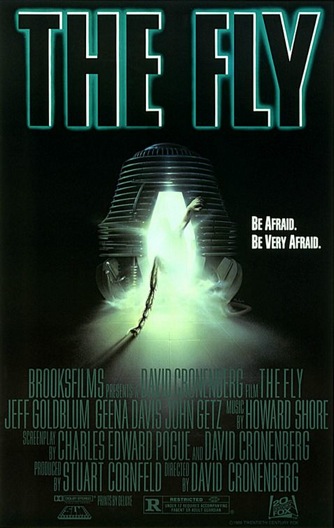
A year or so later I saw another great horror film, The Fly (1958), starring Vincent Price. And then, almost twenty years on (1986), the remake, starring Jeff Goldblum, who plays a brilliant but eccentric scientist named Seth Brundle who is experimenting with teleportation. Naturally the experiments begin to go wrong, and before long Brundle starts turning into the eponymous insect. When he pleads with one of the characters not to be afraid, the reporter working on the teleportation story, Veronica Quaife, played by the gorgeous Geena Davies, delivers what has now become a classic line transcending cinema (I often hear it from Angie!): “Be afraid. Be very afraid.”

The phrase is always used humorously; in fact, however, it well and seriously describes the contemporary cultural mood. Constantly we are told by the movers and shakers to be afraid, to be very afraid. In the eighties, when The Fly was made, the Cold War hadn’t yet thawed and the threat of a nuclear holocaust was the thing to very afraid of. With the collapse of the Soviet Union, the HIV virus and AIDS rushed into to fill the fear vacuum. As the millennium approached, behold, the apocalyptic nutters and doomsayers had a phobic field day. And then 9/11, and ever since, ebbing and flowing, the threat of a terrorist attack, from bombs to bio-chemicals.

But it’s tough to keep people terrified when the threat rarely materialises, so what next to keep us all afraid, very afraid? Have no fear (so to speak!), the pundits will always find something for us to fear in what has been dubbed our “culture of fear” (Frank Furedi). If you fly, DVT, deep vein thrombosis. If you have children, MMR immunization – or scarier still, “stranger danger”, the predatory paedophile lurking in the park, so keep the kids in the garden and lock the gates. If you live in a city, it’s the immigrants, stealing our jobs and houses, and if they’re Muslim, you’ve got a double danger – they might be making explosive devices in their basements.

And now, most recently, there’s been the panic over the illness – sorry, I mean the epidemic – no, check that, I mean pandemic – of swine flu. The term “at risk”, rare even in the mid-nineties, is now so commonplace in the media that it’s become a cliché. You could say that we are now afraid of not being afraid, of not being very afraid. In fact, in the US, “Be very afraid!” has become the shibboleth of the Republican Party.

Now don’t get me wrong. There are things to be concerned about, very concerned about – global warming, in particular, which has huge implications for geopolitics: floods on the one hand and droughts on the other, major food shortages, massive population dislocations, and recently doctors have warned of a “global health catastrophe”. It is now essential that world governments take immediate and radical measures to reduce carbon emissions – the Copenhagen Climate Change Summit begins on December 7th. And it is a no-brainer that we should take reasonable safety precautions in our daily lives. Absolutely. But it’s a question of balance – and we have lost it.

The fact of the matter is that we are safer than we have ever been. And when fears are exaggerated, manipulated, and even manufactured – well, check this out. In 2003 the Professor of Cosmology and Astrophysics at Cambridge University, Martin Rees, wrote a book about the threats facing humanity overt the next hundred years. I’ve read it: it’s called Our Final Century. Except that wasn’t the title Professor Rees submitted to the publisher. His working title was Our Final Century? – question mark. But that wasn’t sensationalist enough for Random House, so they turned the interrogative into a declarative. But even that wasn’t lurid enough for the American edition of the book, the title of which became – wait for it! – Our Final Hour – like sixty minutes and counting! I mean you couldn’t make it up. When fears threaten to turn paranoia into normality, when they threaten to undermine a basic sense of trust, which is absolutely essential to being psychologically healthy human beings, then it’s time to get a grip.

You want fear? Take a look at the ancient Middle East and the period of over a thousand years covered by the Bible. Read the stories. Floods, famines, and plagues; war, scorched earth, and exile: life, applying the memorable words of the seventeenth philosopher Thomas Hobbes, life was “poor, nasty, brutish, and short.” And you didn’t have to exaggerate, manipulate, or manufacture anxiety in the face of the ever-present threats to human well-being: they were in your face. As they are today (as we have just heard in painful detail from Aitemad Muhanna) for Palestinians in the Gaza Strip.

And yet what is the refrain that you hear again and again throughout the Bible? “Be afraid, be very afraid”? On the contrary! Without even a hint of denial of the daily struggle for survival, the Lord says to his people, “Do not be afraid.” In the very midst of big trouble, the Lord says, “Do not be anxious.” In the face of death itself, the Lord says, “Peace be with you.” On what grounds? Not because there is nothing to be afraid of, nothing to be anxious about, nothing to make our stomachs sink and our knees knock. No, no whistling in the dark, not a bit of it. What then? “I am with you,” says the Lord, “I am with you!”

It is that simple. Life is hard, but faith is that simple. “Be afraid, be very afraid”? Don’t be silly! The Lord is with me! The seas roar – the Lord is with me! The mountains tumble – the Lord is with me! The troops are breaching the city walls – the Lord is with me! The angel of death pounds at the door – the Lord is with me! Or: I’ve just been told I have cancer, my husband – it’s the Alzheimer’s – doesn’t recognise me anymore, we’ve missed our mortgage payments again – fill in the blank: at one time or another we’re all going to have a pack of troubles, and we’ll have two chances to get out of them – slim or none. “Do not be afraid,” says the Lord, “I am with you!”

Faith is fearless. Because faith trusts in God, the God Jesus discloses to us, whom he called Father, whom he invites us to call Father too. That is the gift and privilege of being a Christian. And no one and no thing can take that away from us. How can I be afraid when I am the child of the Father of Jesus?

Make no mistake: as our so-called “final” century advances, our culture of fear will get more and more fearful still. And elites with power to keep and money to make will exploit our fears ruthlessly and even religiously. For Christians there will be times of great testing – and temptation. Keep the faith and keep your heads. Stand firm and fast. Do not be afraid. Even when terrible things threaten and happen, be very unafraid. Don’t take cover, Jesus said, but “up on your feet. Stand tall with your heads high. Help is on the way!” (Luke 21:28, The Message). Know the Lord is near. Feel the Lord is here. God is with us. God will always be with us.

Monday, April 21, 2008

Against relevance

One more quote from Michael Korthaus’ new book, Kreuzestheologie: Geschichte und Gehalt eines Programmbegriffs in der evangelischen Theologie (Mohr Siebeck, 2007) – this is from his chapter on Gerhard Ebeling:

“The believer who in the confidence of the word of the cross confesses the death of the sinless Christ as her own death…, no longer requires any worldly assurance, nor any display of faith’s ‘relevance’. To put it another way: the one who asks about the ‘relevance’ of faith, about its supposedly necessary authentication in experience or some other life-praxis, has not yet really believed” (p. 218).

Take that, Moltmann.

Saturday, March 15, 2008

Palm Sunday sermon: lose your faith!

A sermon by Kim Fabricius

There is a lot of twaddle and guff talked during Holy Week. A few years ago I heard a Good Friday sermon – some of you heard it too – in which it was suggested that Jesus, being a carpenter, in order to distract his attention and ease his pain on the cross, may well have admired the quality of its wood. As if our Lord was thinking, “Nice bit of teak this. It’d make a great desk for the study.” It was positively Pythonesque.

No guff and twaddle today. Today I’m going to try to speak shocking, scandalous, scalding truth, say outrageous, even sacrilegious things. You will probably be too polite to heckle or jeer me, but if you walk out on me I shall consider it the highest compliment. I thought of having the elders hand out eggs for to you to throw at me, but pitied the poor cleaners. But eggs are nothing compared to the darts I’m going to fire at you. It’s time to attack your faith, wound it, leave it bleeding, dying, dead – just like the guy on the cross.

Let’s start with some cherished beliefs. For example: that our redemption was achieved by Jesus suffering more horribly than anyone else. But how could we possibly know that? Crucifixion? Yes, a terrible, terrible form of torture and execution. But Jesus’ was only one among thousands and thousands of crucifixions carried out under the so-called Pax Romana – the Roman Peace – when gibbets would stretch for miles down the Apian Way. And the death of Jesus – mercifully swift it was, he expired by mid-afternoon, most usually languished for days. Besides, after the Inquisition, after Auschwitz and the Gulags, after the killing fields in southeast Asia, the tribal slaughter in Rwanda, the mass graves in the Balkans, how can anyone possibly presume to compare national atrocities and personal tragedies, let alone grade them according to some calculus of pain?

For example: that our redemption was achieved by Jesus facing his death more courageously than anyone else. But clearly this is special pleading. And didn’t the first Christians know it – which is why they were hesitant about sensationalising the death of Jesus in terms of martyrdom. As pagans were quick to point out, rather smugly, Jesus sweating blood in Gethsemane, and crying out in agony on Calvary, compares rather unfavourably with the great philosopher Socrates on death row, calmly drinking the hemlock as he reminds a friend – his last words – to remember to sacrifice a cock to Asclepius, the god of heath. For Socrates death was the moment of release, for Jesus a time of despair.

And for example: that our redemption was achieved by Jesus dying at the hands of evil men, particularly “the Jews”. What self-serving propaganda! And what a perverse fillip to the church’s long and shameful history of anti-semitism. No, it was not the bestial but the best that killed Jesus. The state in all its glory and religion at its most awesome killed Jesus: not the mob but the upholders of public order, not the wicked but the standard-bearers of morality. Yes, the trial was conducted with unseemly haste and the evidence was selectively marshalled, but the defendant incriminated himself, confessed even, so (if you like) there were no grounds for appeal. For Jesus did undermine a religious system based on law and cult, and Jesus did threaten a political regime based on violence and retribution. Jesus acted with freedom and broke the rules, embracing the dirty, the deviant, and the dangerous. And Jesus prophetically unmasked the mighty pretensions of the local procurator and publicly subverted Caesar’s claim to lordship. Jesus really did force the hands of Caiaphas and Pilate and leave them no choice but to get rid of him. Better that one man die than that the entire social order be at risk – the tried and trusted scapegoat principle. No doubt about it, this peasant troublemaker from up north profoundly threatened the status quo. He had to go.

So: for one Holy Week forget about the suffering of Jesus, the courage of Jesus, the wickedness of it all. Forget even about the dying of Jesus: it is not to the crucifix, or even to the deposition, that I would direct you – no! Rather look at the man – dead – gaze upon the corpse of Christ, fix your eyes on his cold and rigid body, laid out on a slab, already showing signs of decomposition. I am thinking of Hans Holbein’s painting “Body of the Dead Christ in the Tomb”. The Russian author Dostoevsky saw the painting, in a museum in Basel, stopping on his way to Geneva, and forever after it haunted him like a nightmare. He describes it in his great novel The Idiot. The character Prince Myshkin says: “Why some people may lose their faith by looking at that picture!”

This sermon doesn’t have three points, it’s got three words: Lose your faith! (I warned you I would be sacrilegious.) Yes, lose your faith. Lose your faith in God. For as the French mystic Simone Weil insisted, there is a kind of atheism that is purifying, cleansing us of idols. Lose your faith in the god that the cross exposes as a no-god, a sham god. Lose your faith in the god who is but the product of your projections, fantasies, wishes, and needs, a security blanket or good-luck charm god. Lose your faith in the god who is there to hold your hand, solve your problems, rescue you from your trials and tribulations, the deus ex machina, literally the “machine god”, wheeled out onto the stage in ancient Greek drama, introduced to the plot artificially to resolve its complications and secure a happy ending. Lose your faith in the god who confers upon you a privileged status that is safe and secure. Lose your faith in the god who promises you health, wealth, fulfilment, and success, who pulls rabbits out of hats. Lose your faith in the god with whom your conscience can be at ease with itself. Lose your faith in the god who, in Dennis Potter’s words, is the bandage, not the wound. Lose your faith in the god who always answers when you pray and comes when you call. Lose your faith in the god who is never hidden, absent, dead, entombed. For the “Father who art in heaven” – this week he is to be found in hell – with his Son.

No one puts it more starkly – or more honestly and truthfully – than Bonhoeffer. We must recognize, he wrote from prison, “that we have to learn to live in the world ‘as if God were not here’. And this is just what we do recognize – before God! God himself compels us to recognize it… God would have us know that we must live as men and women who manage our lives without him. The God who is with us is the God who forsakes us… Before God and with God we live without God. God lets himself be pushed out of the world and onto the cross” – and then down from the cross and into the grave. “He is weak and powerless in the world, and that is precisely the way, the only way, in which he is with us and helps us.” God a Super-Power? That god is a demon, the Devil. If that god is your Lord, this week is a call for “regime change” (Walter Brueggemann).

So, yes, lose your faith! For as with life, so with faith: only those who lose it will find it. Or rather may find it. Faith is a risk, and discipleship demands that we learn to live with insecurity and uncertainty, setting out on a journey without a map, with companions who are as lost as we are, following a leader who is always way ahead of us, beckoning mysteriously, “Follow me!”, and then vanishing just as we arrive. God is mystery, ineffable mystery, naming a reality that we know, but the more we know, the more we are forced to un-know and rethink everything we thought we knew.

But hang on, Kim, frankly you’ve lost us. We don’t know what you’re talking about, but whatever it is, it sounds crazy, foolish. You’ve accomplished the remarkable achievement of making someone like Rowan Williams sound lucid, simple, straightforward. And you’re supposed to be a preacher, and isn’t the whole point of the sermon to make it easier to understand God, to increase our faith, so that we can go back to the world feeling edified, uplifted, and ready to share the Good News? Not today it’s not. Today I can’t help you. This week no one can help you. Come Friday, not even God – especially not God – can help you. And come Saturday, God himself is lying in a tomb. Emptiness. Zero. Nothing. But might it be a pregnant emptiness, a significant zero, a silent nothing that yet says everything? (after Alan E. Lewis). We shall have to wait till Easter. Only then shall we learn that this Week is Holy, and its Friday Good. Only then may we just find a new faith rising from the old faith that I pray you will lose today.
Wednesday, December 5, 2007

Benedict XVI: spe salvi

Benedict XVI’s new encyclical on Christian hope is now available online: Spe Salvi (30 November 2007). You gotta like a pope who can quote Kant, Dostoevsky, Adorno, de Lubac, and an obscure Vietnamese martyr – all in a single encyclical! The writer of a recent Telegraph article related this anecdote: “A colleague, staring at the Pope’s latest encyclical, remarked, ‘There’s no news here. It’s all about God’.” One can scarcely imagine a higher compliment for this theologian-pope.

Here are a couple of excerpts on the relation between faith and the future:

“[T]he Christian message was not only ‘informative’ but ‘performative’. That means: the Gospel is not merely a communication of things that can be known – it is one that makes things happen and is life-changing. The dark door of time, of the future, has been thrown open [Obscura porta temporis, venturi temporis, aperta est].” (2)

“Faith is not merely a personal reaching out towards things to come that are still totally absent: it gives us something. It gives us even now something of the reality we are waiting for…. Faith draws the future into the present, so that it is no longer simply a ‘not yet’. The fact that this future exists changes the present; the present is touched by the future reality, and thus the things of the future spill over into those of the present and those of the present into those of the future.” (7)

And I especially appreciate what Benedict has to say about hell and purgation:

“Christ descended into ‘Hell’ and is therefore close to those cast into it, transforming their darkness into light.” (37)

“Some recent theologians are of the opinion that the fire which both burns and saves is Christ himself, the Judge and Saviour. The encounter with him is the decisive act of judgement. Before his gaze all falsehood melts away. This encounter with him, as it burns us, transforms and frees us, allowing us to become truly ourselves. All that we build during our lives can prove to be mere straw, pure bluster, and it collapses. Yet in the pain of this encounter, when the impurity and sickness of our lives become evident to us, there lies salvation. His gaze, the touch of his heart heals us through an undeniably painful transformation ‘as through fire’. But it is a blessed pain, in which the holy power of his love sears through us like a flame, enabling us to become totally ourselves and thus totally of God.” (47)

Friday, October 19, 2007

Faith over the abyss

“Faith is not a ground on which we can place ourselves, not a system which we can obey, not an atmosphere in which we can breathe. Viewed from a human perspective, what was once called religion, conviction and law becomes rather the abyss, anarchy, void. But ‘the law of the faithfulness of God’ [Rom. 3:27] – which is to say, ‘the law of faith’ – is the place where only God can hold us, the place where there is nothing else but God himself, God alone.”

—Karl Barth, Der Römerbrief 1922 (Zollikon-Zürich: Evangelischer Verlag, 1940), pp. 84-85 (English edition, p. 110).

Wednesday, October 10, 2007

Pistis christou

J. Louis Martyn’s essay, “The Apocalyptic Gospel in Galatians,” Interpretation 54 (2000), creates a brilliant encounter between Paul’s apocalyptic gospel and Flannery O’Connor’s use of the grotesque. In one of the footnotes (p. 250), Martyn settles the pistis Christou debate with this anecdote about Karl Barth:

“Oral tradition, which I have not been able to find in print, tells of a priest who made an appointment with K. Barth on a personal matter. Coming after a while to the point, he said, ‘The problem, Dr Barth, is that I have lost my faith.’ The response: ‘But what on earth gave you the impression that it was yours to lose?’”

Tuesday, August 21, 2007

Slavoj Žižek and the loss of faith

Sorry, I couldn’t resist the temptation to quote Žižek once more:

“[W]ho, in fact, are fundamentalists? To put it simply, a fundamentalist does not believe in something, but rather knows it directly. In other words, both liberal-sceptical cynicism and fundamentalism share a basic underlying feature: the loss of the ability to believe in the proper sense of the term. For both of them, religious statements are quasi-empirical statements of direct knowledge: fundamentalists accept these statements as such, while sceptics mock them. What is unthinkable for both is the ‘absurd’ act of a decision which installs every authentic belief, a decision that cannot be grounded in the chain of ‘reason’, in positive knowledge.”

—Slavoj Žižek, The Universal Exception, ed. Rex Butler and Scott Stephens (2nd ed.; London: Continuum, 2007), pp. 308-309.
Grab this Widget ~ Blogger Accessories
free counters
 
bottom